How to calculate fabric for a circle skirt
Estimate circle skirt fabric from 90-degree panels, usable width, and row count, with a worked example and separate allowances for construction and prints.
 Circle Skirt Calc Team
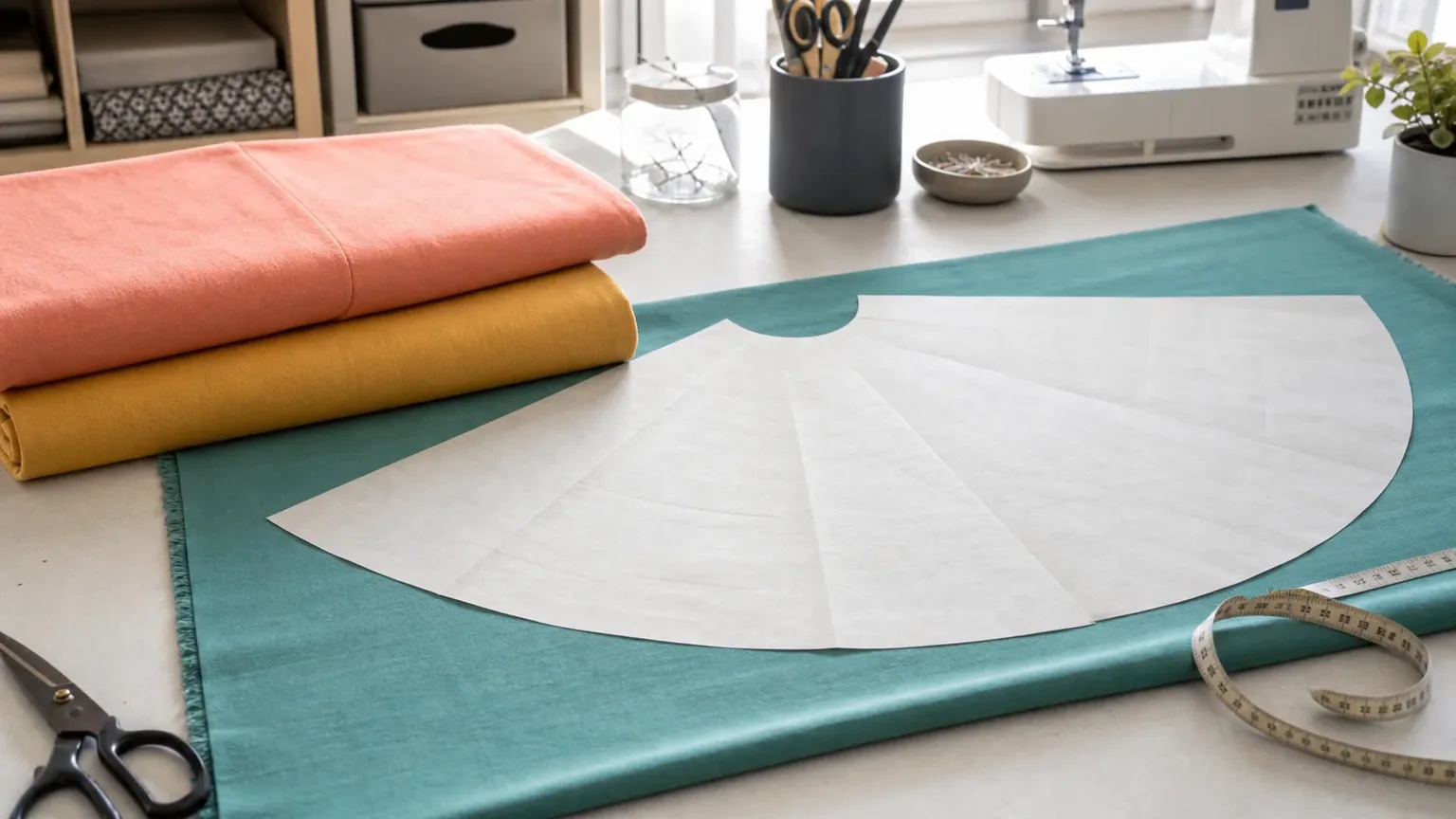
To estimate fabric for a circle skirt, first calculate the hem radius, reserve a square for each 90-degree panel, then count how many squares fit across the usable width and how many rows are needed. The circle skirt calculator does this for a flat, single-layer layout. If even one reserved panel does not fit, it asks for manual layout instead of returning zero fabric.
How the current estimate is calculated
Start with finished measurements and keep ease, joining seams, and the hem separate. If those choices are still open, use the measurement-to-cutting guide first.
The current estimate uses these steps:
hem radius = waist radius + finished length + hem allowancepanel span = hem radius + joining seam allowancepanel count = skirt angle / 90 degreescolumns = min(panel count, floor(usable width / panel span))- When at least one column fits,
rows = ceil(panel count / columns). reserved fabric length = rows x panel span, converted to metres or yards and rounded up to the next hundredth.
Each quarter panel occupies a reserved square in this plan. The joining allowance is included in that space, but you must still add it to the printed paper template's straight seam lines. The waist curve also needs the allowance for your chosen waist finish. The hem allowance is already included; see the seam allowance guide before drawing cutting lines.
If columns = 0, there is no automatic fabric length. The result is manual layout required, not 0 metres or yards. A narrower custom sector split may work, but it needs its own cutting plan and allowance checks; the panel-layout guide explains that decision.
Worked example: the same skirt on four fabric widths
This example keeps the waist at 80 cm, ease at 0, finished length at 50 cm, hem allowance at 2 cm, and joining allowance at 1 cm for a full circle. Only usable width changes. Compare the reserved rows and fabric length, rather than assuming a wider bolt always changes the estimate.
One full-circle skirt, different fabric widths
Waist 80 cm, ease 0 cm, finished length 50 cm, hem allowance 2 cm, joining seam allowance 1 cm. Each quarter panel reserves a square about 65.73 cm wide.
| Usable width | Panels across | Rows | Fabric length |
|---|---|---|---|
| 110 cm | 1 | 4 | 2.63 m |
| 140 cm | 2 | 2 | 1.32 m |
| 150 cm | 2 | 2 | 1.32 m |
| 60 cm | - | - | Manual layout required |
110 cm
140 cm
These conservative estimates use non-directional fabric laid flat in one layer, without optimized nesting. Add fabric for the waistband, closure, shrinkage and pattern matching separately. At 60 cm, even one panel does not fit, so no yardage estimate is given. This is a calculated example, not a sewn sample.
The 60 cm case needs a separate layout rather than an arbitrary extra metre of fabric. If you are checking a different bolt, first measure its usable width with the fabric-width guide. The Fabric Guide in the docs gives a concise explanation of the same calculation and its limits.
What this estimate covers
The reservation grid is for separate quarter panels laid flat in one layer on non-directional fabric. It is not a folded-cut plan, an optimized nesting arrangement, or a guarantee of the minimum fabric purchase. Empty space inside the reserved squares is not automatically reused.
| Check before buying | Why it matters | Next step |
|---|---|---|
| Usable width after selvages and flaws | Determines the number of columns | Measure the actual fabric width |
| Grain, nap, or a print with a top and bottom | May prevent a geometrically possible arrangement | Plan print and stripe direction |
| Waistband and closure pieces | Are outside the skirt-panel estimate | Size a separate waistband |
| Shrinkage and pattern repeats | Need fabric beyond the basic grid | Prewash or test shrinkage, then sketch the matching plan |
Add the waistband, closure pieces, shrinkage reserve, and matching allowance separately. Check any zipper seam that needs more allowance than the regular joining edges.
Fullness changes more than panel count
A larger circle fraction gives more sweep, but the waist radius becomes smaller for the same opening. A smaller fraction uses fewer panels with a larger radius. Because usable width determines the row count, a full circle does not always use more fabric than every less full option under this estimate.
Compare full, half, and quarter-circle shapes for the desired drape, then compare their actual panel span, columns, and rows. Keep the design decision separate from whether a particular bolt can support the plan.
Directional prints need a separate placement check
Mark the waist opening, hem arc, grainline, and seam positions on a layout sketch. Check that motifs stay upright and matching seams have enough repeat allowance. A grid that fits the width can still be unsuitable for nap, border prints, or obvious stripes.
Use the print and stripe layout guide before cutting those fabrics. For the paper template, the PDF instructions explain which printed lines still need seam allowances.
Compare your measurements and usable width in the calculator, then add the separate construction and fabric-specific allowances before purchasing.