Full, half, and quarter circle skirts compared
Understand how skirt type affects fullness, drape, hem sweep, and fabric use before choosing a draft.
 Circle Skirt Calc Team
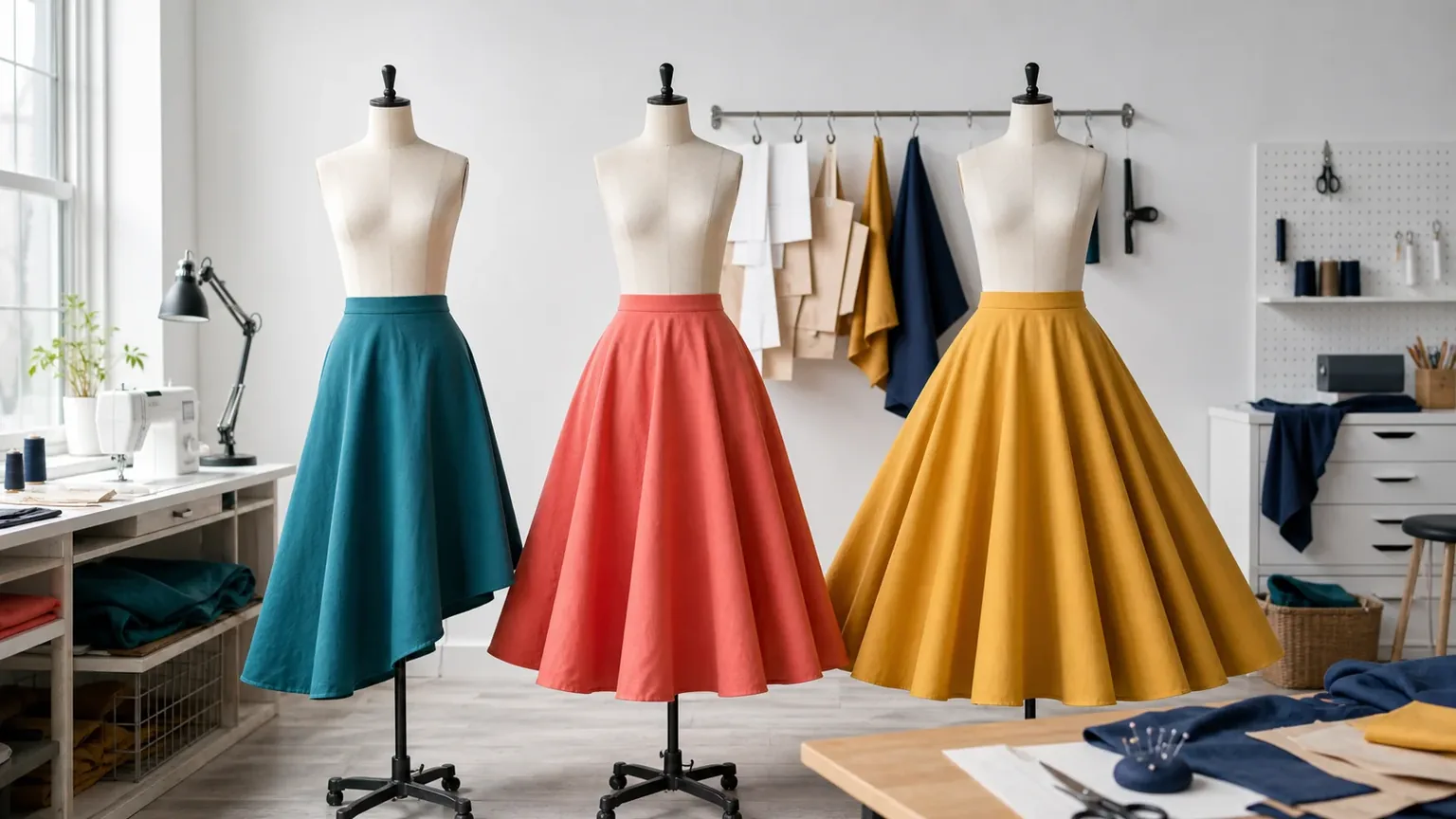
Make the fullness choice within the pattern-making guide. The radius formula shows how each option changes the draft, while the fabric-planning guide explains how usable width and panel rows affect yardage. Compare the options in the calculator before buying fabric.
Full circle skirts
A full circle skirt gives more sweep than a half or quarter circle. It hangs with strong movement and works well for dancewear, statement outfits, and lightweight fabrics that can handle volume.
The tradeoff is more panels and a longer hem to finish. For the same waist opening and length, a full circle has a smaller waist radius and outer diameter than a half or quarter circle. Fabric use still depends on how its panels fit the usable width; longer skirts need careful layout checks.
Half circle skirts
A half circle skirt keeps a graceful flare with less sweep than a full circle. It is often easier to wear for daily garments because the hem has movement without overwhelming the silhouette.
Half circles use fewer quarter panels, but each has a larger radius for the same opening. Check the reserved panel span before choosing one for limited fabric width; fewer panels do not guarantee lower yardage.
Quarter and three-quarter circle skirts
Quarter circle skirts are quieter and closer to an A-line shape. They can feel more structured, especially in medium-weight materials. Their larger waist radius can require a wider reserved panel, so compare the actual layout instead of assuming they always use the least fabric.
Three-quarter circle skirts sit between half and full in fullness. They are useful when you want visible swing without a full-circle silhouette; check their actual row count before deciding whether they fit a fabric budget.