Choosing fabric width for circle skirts
Learn why fabric width changes the cutting layout, seam count, and yardage needed for full and partial circle skirts.
 Circle Skirt Calc Team
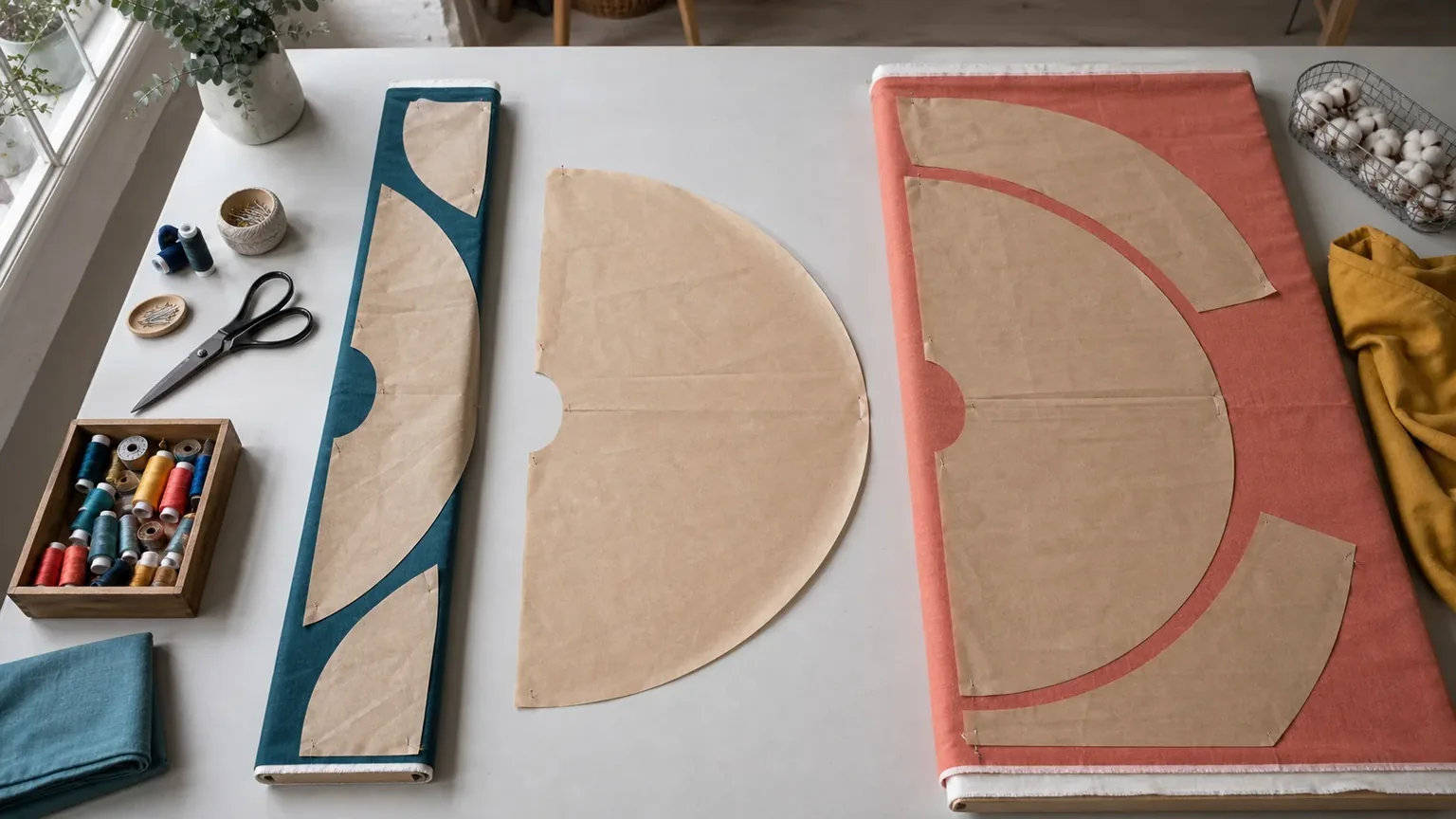
Use fabric width inside the broader fabric-quantity planning guide. If the pattern does not fit, move to a balanced panel layout; if the cloth is directional, check the print and stripe rules. Test the actual width in the calculator before committing to a layout.
Fabric width controls the layout
Circle skirts are wide because the radius includes both the waist opening and the skirt length. A small change in skirt length can push the pattern beyond a narrow fabric width.
Before buying fabric, measure usable width after excluding unusable selvages and flaws; remeasure after prewashing when shrinkage matters. For the current calculator estimate, compare that width with one quarter panel's reserved span: hem radius + joining seam allowance. This is a flat, single-layer grid, not a folded whole-circle layout. The Fabric Guide explains how columns and rows determine length, and why an unfit panel needs manual layout rather than a zero estimate.
Wider fabric can reduce seams
For a manually checked alternative, wide fabric may allow a folded layout or two half-circle panels. Narrow fabric may require more sectors, which add seams and change the visual flow of prints. The calculator keeps its 90-degree panel count for the chosen fullness; wider fabric may reduce the reserved row count, but it does not automatically remove joining seams.
More seams are not automatically bad. They can help control grainline, balance print placement, and make cutting possible when the ideal single-piece layout is too large.
Check nap and directional prints
Velvet, corduroy, satin, border prints, and directional motifs need extra planning. Pieces may need to face the same direction, which can increase yardage compared with a plain non-directional fabric.
When in doubt, test the calculator in professional mode and compare the fabric width, seam allowance, and skirt type before cutting. Add waistband and closure pieces, shrinkage reserve, and pattern-matching needs separately; the estimate does not optimize nesting or arrange directional motifs.