Elastic waist circle skirt drafting guide
Draft an elastic waist circle skirt by separating the hip-pass opening, casing dimensions, and tested elastic length.
 Circle Skirt Calc Team
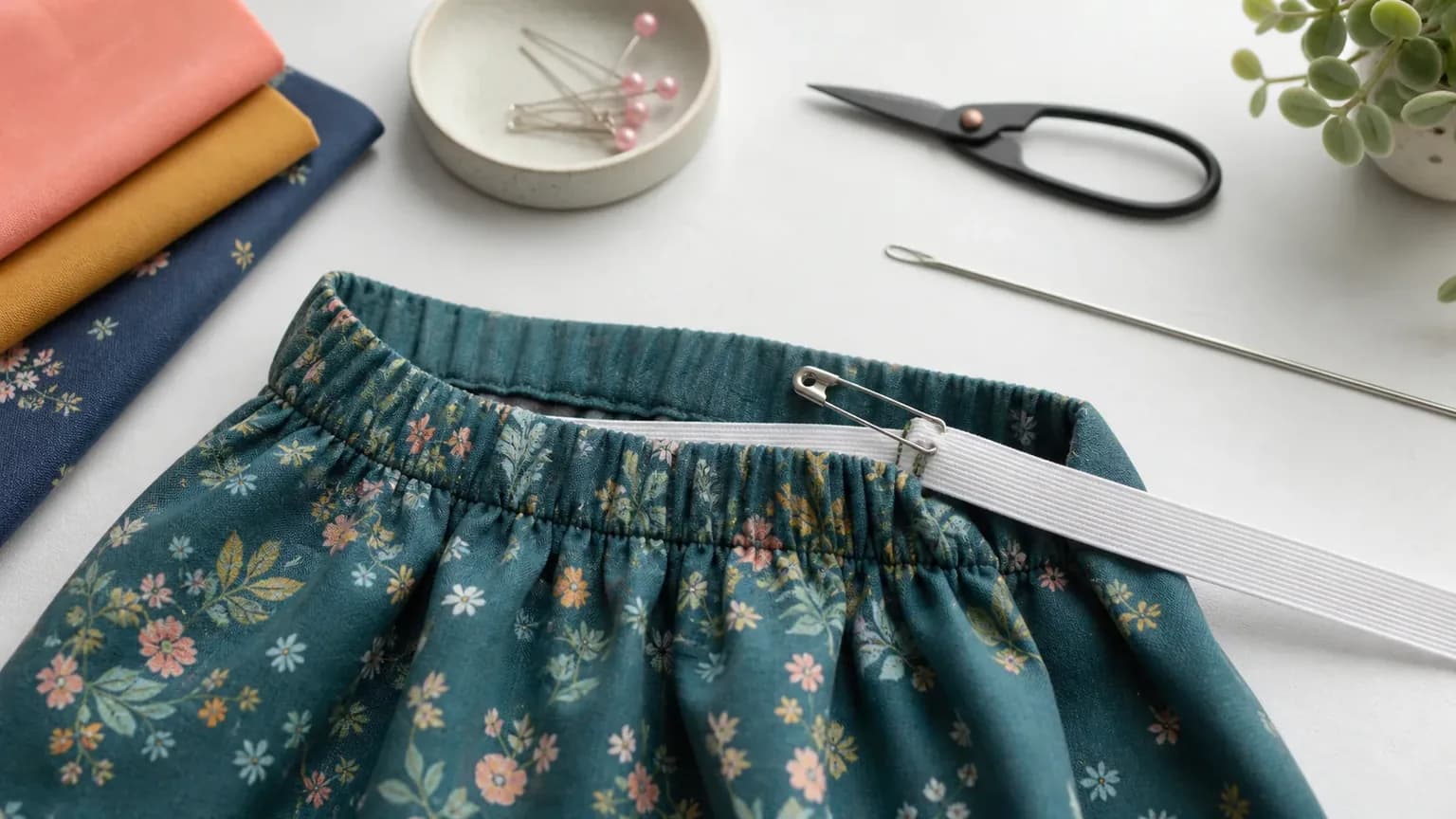
An elastic waist does not mean drafting the skirt opening to the waist and simply attaching shorter elastic. Within the circle skirt pattern-making guide, first decide whether the garment must pull over the hips or will also have a closure.
Waist opening versus hip-pass opening
Consider a 76 cm waist and a 98 cm widest hip path. A pull-on skirt needs an opening larger than 98 cm, often with a small movement allowance; use 102 cm here as a trial value. For a full circle, that opening produces a radius of about 102 / (2 x pi) = 16.2 cm, not the 12.1 cm radius produced by the waist.
| Part | Example value | How to decide |
|---|---|---|
| Skirt opening | 102 cm | Hip path plus movement allowance |
| Casing circumference | Matches opening | Must not block the hip path |
| Elastic length | Test on body | Depends on elastic recovery and comfort |
| Elastic overlap | Supplier/test dependent | Enough for a secure join |
The opening measurement comes from the measurement guide. The finished elastic and casing construction belong in the waistband guide.
Drafting and fitting steps
- Measure the waist and the widest route the skirt must pass over.
- Draft the skirt waist opening from the larger pass measurement.
- Add the casing depth and seam allowance outside the finished skirt geometry.
- Stretch-test the actual elastic, fit it comfortably, and only then cut and overlap it.
- Distribute gathers in quarters before final stitching.
For larger diameters, the plus-size pattern guide explains panel and support checks without treating body size as an exception.
For a child, follow the kids measurement guide with adult supervision and test sitting, stepping, and pull-on access. Adjustable elastic can support a planned growth allowance, but it does not replace current waist and hip-pass measurements.
Open the waistband and elastic planning tool after deciding the required opening. Its advice is independent: it does not automatically change the skirt opening or save its inputs with a skirt project. Enter the required opening in the skirt calculator yourself, and keep tested elastic length as a separate fitting value.