Circle skirt radius formula explained
Learn the circle skirt radius formula for full, half, quarter, and double circle skirts, with practical notes on ease, seam allowance, and hem allowance.
 Circle Skirt Calc Team
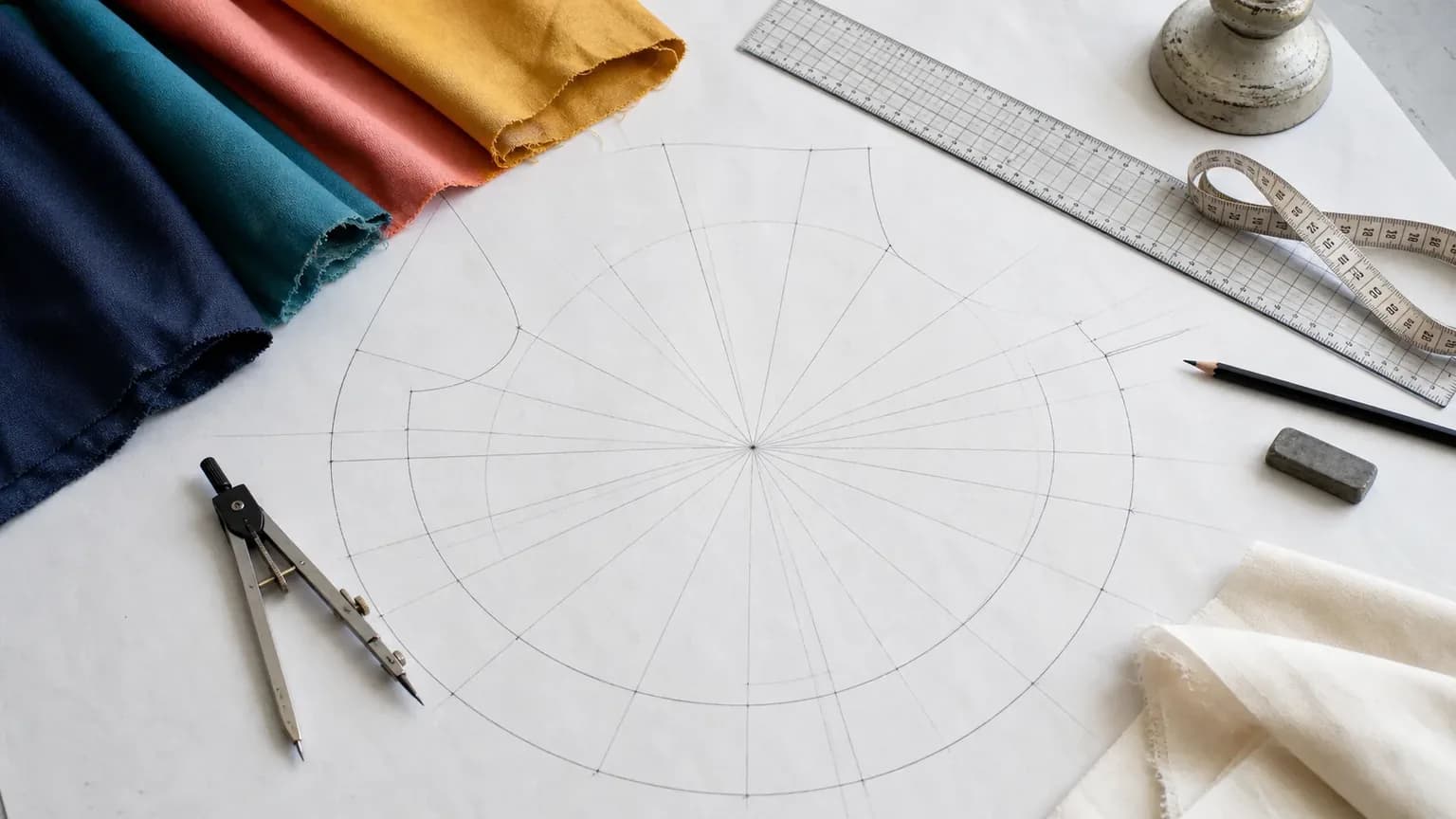
Radius is one step in the complete pattern-making guide, not the whole cutting plan. Confirm the inputs with the measurement guide, then compare full, half, and quarter-circle geometry. You can also calculate the radius and layout online.
The basic radius formula
The circle skirt radius starts with the waist measurement. For a full circle skirt, divide the adjusted waist by 2 x pi:
waist radius = adjusted waist / (2 x pi)
The adjusted waist is the finished waist plus the ease you want. A fitted waistband may need only a small amount of ease, while an elastic waist needs enough room to pass over the hips before it gathers back to the waist.
If you want the calculator to handle the arithmetic and preview, open the circle skirt calculator and enter your waist, length, fabric width, and allowances.
How fullness changes the formula
Different skirt fullness choices change how much circle is used around the waist:
- Full circle: divide by
2 x pi x 1 - Half circle: divide by
2 x pi x 0.5 - Quarter circle: divide by
2 x pi x 0.25 - Double circle: divide by
2 x pi x 2
That means a half circle skirt needs a larger waist radius than a full circle skirt for the same waist measurement. A double circle skirt needs a smaller radius because the waist is distributed across more fabric.
Add length after the waist radius
Once you know the waist radius, add the finished skirt length and hem allowance to get the hem radius:
hem radius = waist radius + finished length + hem allowance
This hem radius controls the full pattern diameter. If the diameter is larger than your fabric width, you will need panels, folds, or a different cutting layout. For more detail, read the fabric width guide.
Keep allowances separate
Do not hide seam allowance and hem allowance inside the body measurements. Keep them separate so you can adjust construction choices without changing the finished garment size.
A clean workflow is:
- Measure the finished waist.
- Choose the skirt fullness.
- Add only the ease needed for the waistband style.
- Calculate the waist radius.
- Add finished length and hem allowance for the hem radius.
- Check whether the pattern diameter fits the fabric width.
The formula is simple, but the cutting decision is where mistakes happen. That is why the calculator combines radius, fabric width, and layout notes in one place.