How to hem a circle skirt: four methods compared
Compare narrow turn, baby hem, bias facing, and rolled hem by fabric weight, curve severity, equipment, and finish.
 Circle Skirt Calc Team
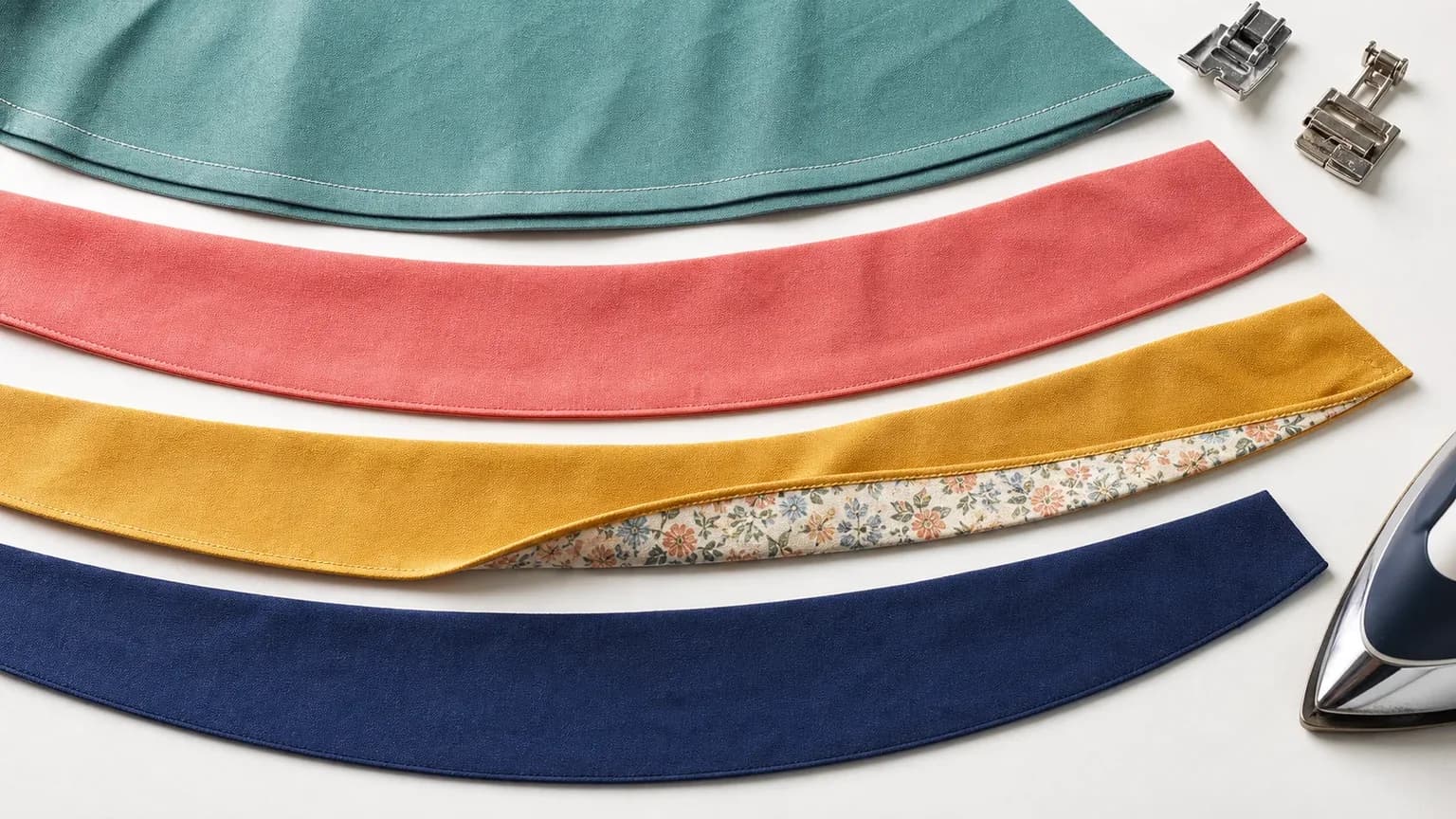
Choose a hem method after the skirt has hung and been leveled in the circle skirt pattern-making workflow. The best method controls the long curved edge without forcing excess fabric into a wide fold.
Method comparison
| Method | Best for | Typical allowance | Tradeoff |
|---|---|---|---|
| Narrow double turn | Stable light to medium fabrics | 1-1.5 cm | Simple, but needs easing on tight curves |
| Baby hem | Fine, fluid fabrics | About 1 cm | Light finish, more stitching and trimming |
| Bias facing | Medium or bulky fabric, clean inside | Facing plus small seam allowance | Adds a separate strip but avoids a wide self-turn |
| Rolled hem | Very light fabric and suitable machine | 0.6-1 cm | Fast after practice; difficult on thick or unstable cloth |
The exact cutting addition belongs in the hem allowance guide. Method and allowance are linked, but they answer different questions: the method is the construction process; the allowance is the material reserved for it.
Decision steps
- Complete the bias-stretch hanging and leveling workflow.
- Test a 20-30 cm curved scrap using the intended thread, needle, and machine settings.
- Reject any method that twists, ropes, or visibly ripples the edge.
- For a narrow double turn, stay-stitch near the first fold and ease only the excess between stitches.
- For bias facing, pre-shape the strip and understitch before turning it inside.
- Press in short sections without dragging the curved edge.
Fabric weight and direction also affect the cutting plan; consult the fabric-planning guide before buying extra yardage solely for a facing.
Set the chosen hem allowance in the circle skirt calculator, then confirm the finish on a fabric sample before cutting the final hem.