Hem allowance tips for circle skirts
Circle skirt hems are curved, so hem allowance, fabric weight, and finishing method need to be chosen together.
 Circle Skirt Calc Team
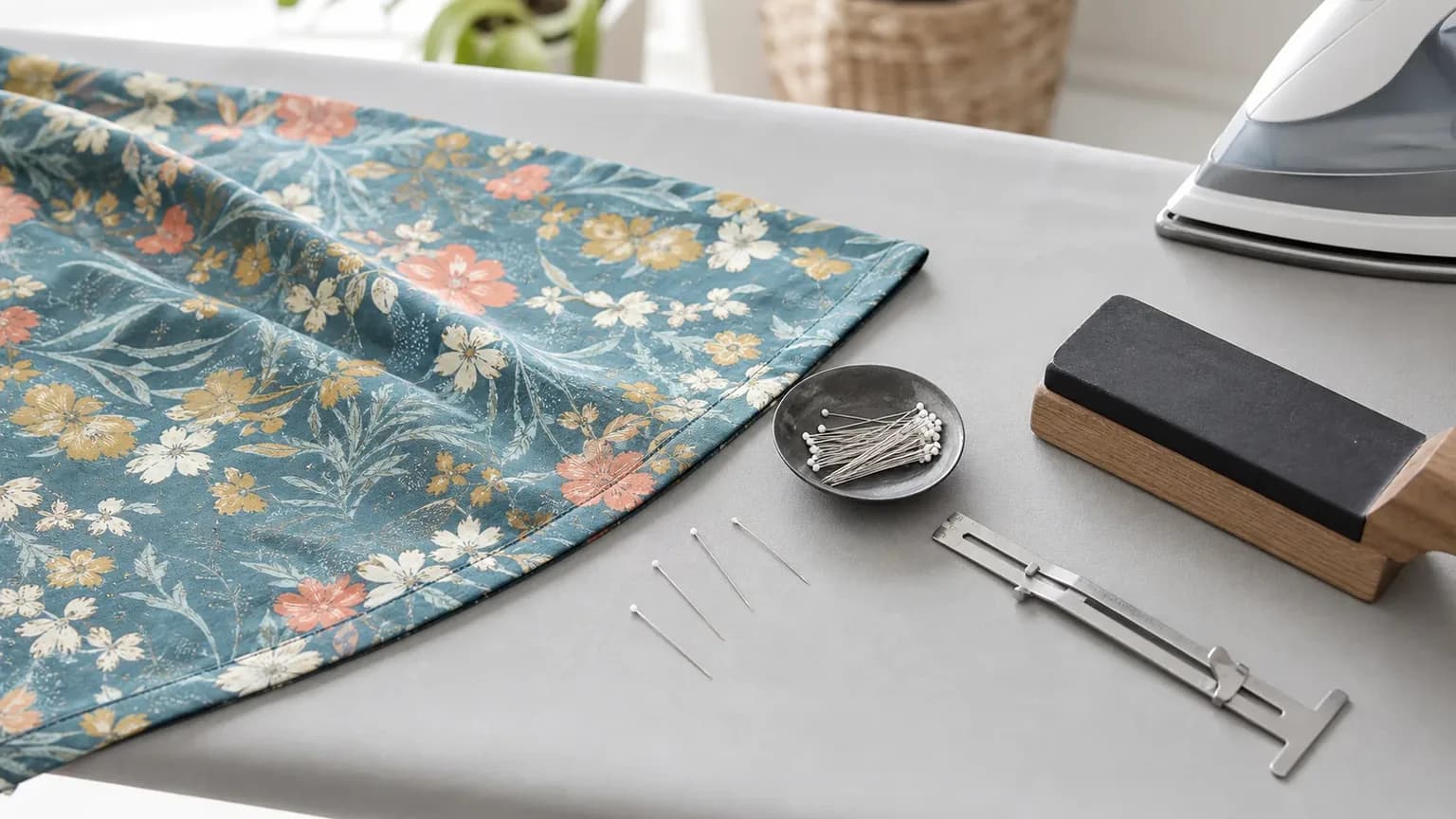
Choose the allowance as part of the pattern-making workflow, but do not confuse it with the finishing method. First understand bias drop and leveling, then select a finish in the circle-skirt hemming comparison. Add the chosen allowance in the calculator before drafting.
Curved hems need control
A circle skirt hem is a long curve. Wide folded hems can ripple or twist because the outer edge is longer than the stitching line above it.
For many fabrics, a narrow hem is easier to control. Test a sample with the actual fabric before committing to a wide finish.
Let the skirt hang before hemming
Bias areas can drop after the skirt hangs. If the fabric is soft, heavy, or loosely woven, let the skirt hang before marking the final hem.
After hanging, level the hem from the floor or dress form. Trim only after checking the garment on the body or on a form with the correct waist height.
Match the finish to the fabric
Light fabrics may work well with a rolled hem. Medium fabrics often prefer a narrow turned hem. Heavy fabrics may need bias binding, facing, or a serged edge depending on the design.
Add the hem allowance that matches the finish you will actually sew. A beautiful draft still needs a realistic construction plan.